
Charity Hudley discusses the tendency for sociolinguists, etc, to “study down,” examining “people in statues lower than their own.” Then, in the next section, funding is discussed, but only briefly and only in […]
In what ways can you see the objectives of linguists involved in language documentation conflicting with the priorities of the speakers?What do you think might cause a speech community to harbor a distrust of […]
The readings for this week deal with social activism within sociolinguistics. Two major questions are debated: 1) How much of an activist role should sociolinguists take, and 2) What form should sociolinguistic […]
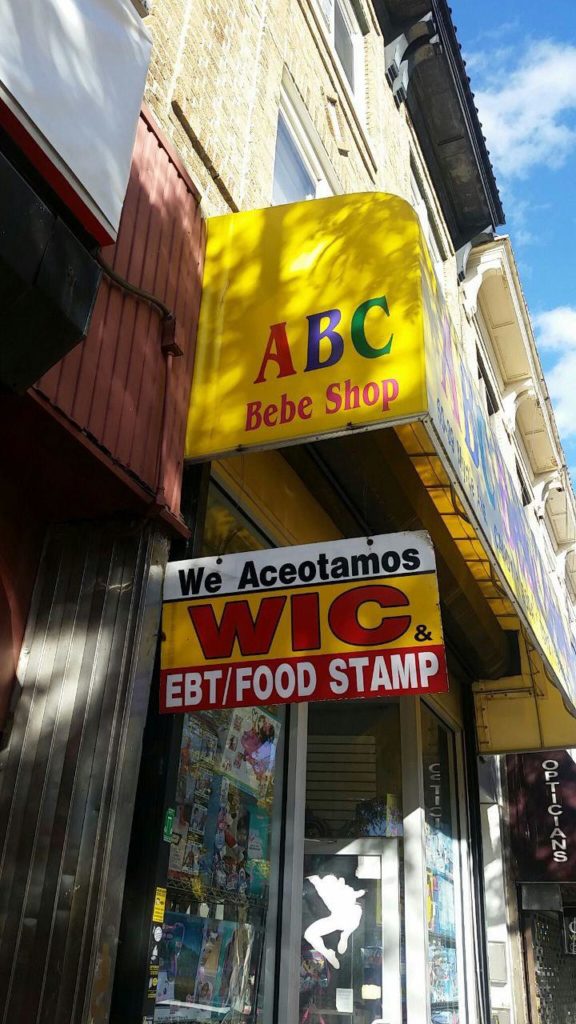
Although of the discussion of linguistic landscapes focuses on how they highlight what languages are valued in multilingual spaces, semiotic landscapes have significance beyond these factors. One example is the […]
The authors
discuss how certain medium characteristics affect interaction
management, including the lack of visual cues and one-way vs.
two-way transmission. How do synchronous or asynchronous […]
Early on in her article, Squires introduces the idea that internet language is defined by and enregistered based on its opposition to “Standard English”. This is pretty comparable to the way we define most […]
With the rise of technology and social media comes the increase in Computer-Mediated Communication (CMC) and Computer-Mediated Discourse (CMD). As technologies evolve, so do the languages used to engage in CMC. […]
“Is email a variety of speech (as many people are claiming)? What important new properties does it share with writing? Does it have emergent qualities that are unlike those typifying speech or writing?”
1. One of the main features distinguishing written texts from spoken language is their permanence, more specifically their ability to have a potentially very large number of readers across a number of cultural and […]
Questions for Sebba (2012)
1. One of the main features distinguishing written texts from spoken language is their permanence, more specifically their ability to have a potentially very large number of readers […]
Good day to everyone! I hope everyone has had a lovely week. My name is Alina Fernanda Picayo and I will be writing some of my reflections and thoughts on Jannis Androutsopoulos’ Non-standard spellings in media […]
The readings this week all revolved around the primary focus of
writing as a form of language and discussed the different ways to investigate writing
through a sociolinguistic lens. Each article approached […]
In the German fanzines article, we see a German orthographic appropriation of English loan words which reflect German pronunciations such as “Blählist” (for playlist) and “Pönks” (Punks). There are countries […]
#1 “The New York Times’ circulation of the survey and its subsequent recirculation via social media illustrates that many individuals are interested in descriptions of how they speak.” What are other reaso […]
Received Pronunciation was integrated in schools and the teachers had “training in ethnographic methods of participant observation that allow him to hunt out the phonetic ‘defects’ peculiar to each locale and, […]